


Timothy
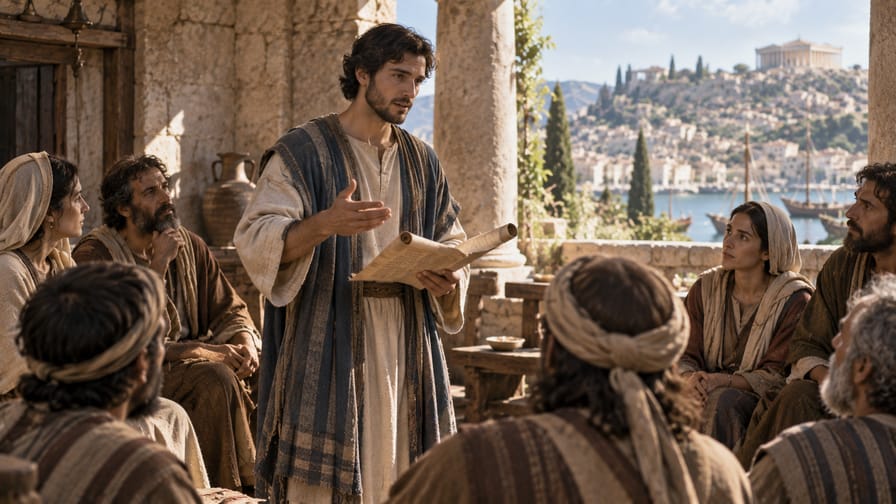
The figure of Timothy emerges in the Scriptures as one of the most prominent and faithful collaborators of the Apostle Paul, serving as an exemplary model of discipleship, pastoral leadership, and perseverance in faith. His life and ministry, recorded in detail in the New Testament, offer crucial insights into the formation of the early church, the transmission of sound doctrine, and the challenges of Christian service.
This in-depth study aims to explore the richness of his legacy, analyzing his onomastic meaning, his historical context, the nuances of his character, his profound theological relevance, and his lasting impact on the canon and Christian tradition, from a conservative evangelical Protestant perspective, which values biblical authority and rigorous exegesis.
1. Etymology and meaning of the name
The name Timothy, in Greek Τιμόθεος (Timotheos), is of Hellenic origin and holds a profoundly relevant meaning for understanding his character and ministry. It is composed of two Greek roots: timē (τιμή), which means "honor," "esteem," or "reverence," and theos (θεός), which means "God."
Thus, the literal meaning of the name Timothy is "one who honors God" or "honored by God." This etymology is notably prophetic and descriptive of the life of the biblical character, who dedicated his existence to serving God and His gospel, being also greatly honored by the Apostle Paul and the early Christian community.
There are no other significant variations of this name in biblical languages, as it is predominantly Greek. Unlike Hebrew or Aramaic names that can have multiple forms, Timothy maintains its original form in the context of the New Testament, reflecting his mixed cultural heritage (Greek father).
There are no other biblical characters with the same name who are prominent in the Scriptures, making the Timothy associated with Paul a unique and unmistakable figure. This singularity highlights the importance of his contribution to the New Testament narrative and to Christian theology.
The theological significance of the name lies in its correspondence with the calling and character of Timothy. As one who "honors God," he exemplifies the dedication and faithfulness expected of a servant of the Lord. His name serves as a reminder that true service to God is characterized by reverence and the desire to glorify Him in all actions and words, a recurring theme in the Pastoral Epistles.
2. Historical context and biblical narrative
2.1 Family origin and genealogy
The life of Timothy unfolds in the effervescent setting of the 1st century AD, a period of intense expansion of Christianity under the Roman Empire. He was introduced to the biblical narrative in the book of Acts of the Apostles, during Paul's second missionary journey, around the years 49-52 AD. His hometown was Lystra, in the Roman province of Galatia (present-day Turkey).
His family origin is notably mixed, a crucial aspect for understanding his role and the challenges he faced. His mother, Eunice, was Jewish and a believer, and his grandmother, Lois, was also Jewish and a woman of genuine faith (2 Timothy 1:5). From infancy, Timothy was instructed in the Holy Scriptures by them (2 Timothy 3:15), which formed the basis of his piety and biblical knowledge.
However, his father was Greek (Acts 16:1), and apparently was not a believer, which means that Timothy was not circumcised in infancy, according to Jewish custom. This mixed heritage made him a bridge between the Jewish and Gentile worlds, a valuable quality for missionary ministry in a multicultural environment.
2.2 Key events of his life and ministry
Timothy's call to ministry occurred when Paul visited Lystra on his second missionary journey. Paul found him well-recommended by the brothers in Lystra and Iconium (Acts 16:2), which attests to his reputation for faith and good character even at a young age. Recognizing his potential and sincere faith, Paul invited him to be his traveling companion.
In an act of missionary pragmatism, Paul circumcised Timothy before they departed (Acts 16:3). This decision was not motivated by a belief in the necessity of circumcision for salvation, for Paul had vehemently defended the opposite in Galatians. Instead, it was a strategy to avoid unnecessary obstacles to evangelism among the Jews, who might be offended by a preacher with a Jewish mother and Greek father who was uncircumcised.
From that point onward, Timothy became a constant companion of Paul, actively participating in his missionary journeys. He was with Paul in Philippi, Thessalonica, and Berea (Acts 16:12-17:14). In Thessalonica, after the persecution, Paul sent him back to strengthen and encourage the new converts (1 Thessalonians 3:1-2).
He also served in Corinth (1 Corinthians 4:17 16:10-11), where Paul sent him to instruct and remind the Corinthians of the ways of the Lord. In several epistles, Timothy is mentioned as co-author or as a trusted messenger, evidencing his crucial role in communication and maintaining order in the Pauline churches (e.g., Romans 16:21 Philippians 1:1 Colossians 1:1 Philemon 1).
Later, Paul left him in Ephesus to oversee the church, combat false teachings, and organize leadership (1 Timothy 1:3). The Epistles to Timothy, particularly 1 and 2 Timothy, are testaments to this pastoral responsibility and contain detailed instructions on the life and doctrine of the church. The last canonical mention of Timothy in Hebrews 13:23 indicates that he was released from prison, suggesting that he also faced persecution for his faith.
2.3 Geography related to the character
Timothy's life was marked by an extensive geographical journey, accompanying Paul through vast regions of the Roman Empire. His hometown, Lystra, in Lycaonia (part of Galatia), was the starting point of his ministry (Acts 16:1).
He traveled through important cities such as Iconium and Antioch of Pisidia, in the interior of Asia Minor, and then to Macedonia, visiting Philippi, Thessalonica, and Berea. His presence is also recorded in Achaia, especially in Athens and Corinth, cultural and commercial centers of Greece.
Asia Minor, with an emphasis on Ephesus, became the main field of his pastoral ministry, where Paul entrusted him to lead and shepherd one of the most important churches of the time (1 Timothy 1:3). There are also indications that he was in Rome, both with Paul during his first imprisonment, and possibly in his own imprisonment, as suggested by Hebrews 13:23.
2.4 Relationships with other biblical characters
Timothy's most significant relationship was, without a doubt, with the Apostle Paul. Paul called him "my beloved child" (1 Corinthians 4:17) and "true son in the faith" (1 Timothy 1:2), demonstrating not only deep affection, but also a relationship of spiritual mentorship and apostolic fatherhood.
Besides Paul, Timothy interacted with Silas, another companion of Paul (Acts 16:19), and with Luke, the author of the book of Acts and the Gospel that bears his name, who probably traveled with them at some stages. He also worked with Titus, another of Paul's apostolic delegates, although their spheres of activity were distinct (Titus in Crete, Timothy in Ephesus).
His life was intertwined with that of many other believers in the early church, including Aquila and Priscilla, and the brothers and sisters of the churches he visited and served. These relationships demonstrate the collaborative and communal nature of apostolic and pastoral ministry in the beginnings of Christianity.
3. Character and role in the biblical narrative
3.1 Analysis of character and spiritual qualities
The Scriptures reveal Timothy as an individual of remarkable character, marked by sincere faith and deep devotion. Paul praises him for his "unfeigned faith" (2 Timothy 1:5), which he inherited from his grandmother Lois and his mother Eunice, indicating a genuine piety rooted since childhood. This faith was the basis of his constancy and loyalty to the gospel and to Paul.
He demonstrated great humility and loyalty, essential characteristics for a disciple and co-worker. Paul describes him as one who genuinely cared for the welfare of the churches (Philippians 2:19-20), showing a pastoral and altruistic heart. His willingness to serve and his reliability made him an ideal emissary for Paul on various missions.
Despite his many virtues, Timothy was also characterized by a certain shyness or apprehension (1 Corinthians 16:10 2 Timothy 1:7), and perhaps by fragile health (1 Timothy 5:23). Paul exhorts him to "let no one despise your youth" (1 Timothy 4:12), suggesting that his youth and perhaps his reserved nature could be a challenge to his pastoral authority in Ephesus.
However, Paul also encourages him to "fan into flame the gift of God" that was in him (2 Timothy 1:6), a gift conferred on him by the laying on of hands of the elders and the apostle himself (1 Timothy 4:14). This indicates that, despite his weaknesses, Timothy possessed a divinely granted calling and spiritual endowment.
3.2 Calling and specific role
Timothy's calling was multifaceted. Initially, he served as a disciple and missionary companion to Paul, learning directly from the apostle and observing his ministry firsthand. This phase was crucial for his formation and maturation as a Christian leader.
Subsequently, he ascended to the role of apostolic delegate, being sent by Paul to represent his authority and message in various churches, such as Corinth and Thessalonica. In these missions, he had the responsibility to encourage believers, correct doctrinal deviations, and strengthen the organization of the communities.
His most known and documented role is that of pastor-leader of the church in Ephesus. The Pastoral Epistles (1 and 2 Timothy) are addressed to him in this context, providing him with guidelines on church administration, sound doctrine, public worship, qualifications for elders and deacons, and combating heresies (1 Timothy 3:1-13 4:6-16).
He acted as a teacher and overseer, tasked with preserving the purity of the gospel and equipping other leaders (2 Timothy 2:2). His role was vital for the continuity of Pauline ministry and for the stability of the church in one of the most strategic cities of the Roman Empire.
3.3 Significant actions and character development
Timothy's actions were marked by his obedience and diligence in fulfilling the tasks Paul entrusted to him. His willingness to be circumcised for the sake of the gospel (Acts 16:3) demonstrates his flexibility and prioritization of the mission over personal conventions, provided they did not compromise the truth of the gospel.
His perseverance in Ephesus, facing false teachers and leading a complex church, is a testament to his courage and commitment. Paul exhorts him to "fight the good fight of faith" (1 Timothy 6:12) and to "guard the good deposit" entrusted to him (2 Timothy 1:14), indicating the seriousness and difficulty of his mission.
Throughout the biblical narrative, we see the development of Timothy from a young disciple to a mature leader, though still needing encouragement and admonition from his mentor. He grew in his ability to lead, teach, and defend the truth, becoming a fundamental pillar for the early church and a spiritual successor to the Apostle Paul.
4. Theological significance and typology
4.1 Role in redemptive history and theological themes
The life and ministry of Timothy play a significant role in redemptive history, especially with regard to the organization and perpetuation of the post-apostolic church. He represents the bridge between the generation of founding apostles and subsequent generations of leaders and pastors, demonstrating the need for faithful discipleship and ministerial succession.
Although Timothy is not a typological figure in the direct Christocentric sense, like a king or prophet of the Old Testament who prefigures Christ, he is an exemplary model of a servant of Christ and pastor. His life illustrates the practical application of gospel principles in ecclesiastical leadership and in the personal life of the believer.
His story is intrinsically linked to several central theological themes in the evangelical Protestant perspective. The theme of discipleship is prominent, with Paul investing deeply in Timothy's formation, teaching him not only doctrine, but also the practice of ministry (2 Timothy 3:10-11).
Faithfulness to the calling and sound doctrine is another crucial theme. Paul exhorts Timothy to be "an example to the believers" (1 Timothy 4:12) and to "guard the deposit of faith" (1 Timothy 6:20), emphasizing the importance of perseverance and doctrinal integrity in the face of heresies and apostasies.
Christian leadership and ecclesiology are extensively addressed through Timothy. The Pastoral Epistles, written to him, provide divinely inspired guidelines on the qualifications of elders and deacons (1 Timothy 3:1-13), church discipline, the care for widows, and the responsibility to preach the Word "in season and out of season" (2 Timothy 4:2).
The authority of the Scriptures is strongly affirmed in 2 Timothy 3:16-17, where Paul declares that "all Scripture is God-breathed and profitable for teaching, for reproof, for correction, for training in righteousness." Timothy, having been instructed in the Scriptures from infancy, is encouraged to abide in them as the source of all truth and wisdom for salvation and service.
4.2 Doctrine and teachings associated with the character
The Pastoral Epistles, addressed to Timothy, are a rich source of doctrine and practical teachings for the church. They deal with the nature of God, the person of Christ, the work of the Holy Spirit, salvation by grace through faith, and Christian ethics.
In 1 Timothy, Paul instructs on universal prayer (1 Timothy 2:1-4), conduct in worship (1 Timothy 2:8-15), and the nature of the church as "pillar and buttress of the truth" (1 Timothy 3:15). He also warns against false teachers and their "myths and endless genealogies" (1 Timothy 1:3-4), defending the purity of doctrine.
The second letter to Timothy, written by Paul in his final days, is a testament of encouragement to perseverance. It addresses the need to suffer for the gospel (2 Timothy 1:8), the importance of faithful preaching of the Word (2 Timothy 4:2), and the security of salvation in Christ (2 Timothy 1:12). Paul reminds Timothy of the great day of judgment and reward for those who love the appearing of Christ (2 Timothy 4:8).
In its entirety, the life of Timothy and the epistles addressed to him are a manual for pastoral life and ministry, emphasizing personal integrity, doctrinal soundness, passion for evangelism and discipleship, and resilience in the face of adversity. He serves as a paradigm of how a believer can honor God through faithful service and the defense of the truth of the gospel.
5. Biblical-theological legacy and canonical references
5.1 Mentions in other biblical books and contributions
Timothy's presence in the biblical canon is vast and significant. Besides the two epistles that bear his name, he is mentioned in several other Pauline letters, attesting to his constant and indispensable collaboration with the apostle. He is co-author of 1 and 2 Thessalonians, Philippians, Colossians, and Philemon, where his name appears alongside Paul's in the initial greeting.
He is also referred to in Romans 16:21 as "my co-worker", and in 1 and 2 Corinthians (1 Corinthians 4:17 16:10 2 Corinthians 1:1, 19), where Paul sends him as his representative. The mention in Hebrews 13:23, stating that Timothy was released from prison, is the last canonical reference to him, indicating that his dedication to the gospel also led him to suffering.
Although Timothy is not the author of any biblical book, his contribution is immeasurable as the main recipient of the Pastoral Epistles. These letters are considered a fundamental pillar of New Testament theology, providing the basis for ecclesiology, pastoral ethics, and the understanding of sound doctrine in the church.
5.2 Influence on biblical theology and Christian tradition
Timothy's influence on biblical theology is primarily felt through the epistles addressed to him, which have profoundly shaped the church's understanding of pastoral ministry and ecclesiastical organization. The figure of Timothy became the prototype of the young pastor, the faithful leader, and the guardian of sound doctrine.
In Christian interpretive tradition, from the Church Fathers to the Reformers and contemporary evangelical theologians, Timothy is consistently celebrated as a model of discipleship and faithfulness. His weaknesses and challenges, such as his youth and shyness, make his story even more relatable and encouraging for leaders in training.
Reformed and evangelical theology, in particular, highly values the Pastoral Epistles for their emphasis on the authority of Scripture, on the need for qualified and godly leadership, on doctrinal purity, and on the evangelistic mission. Timothy is seen as an example of how a leader should "rightly handle the word of truth" (2 Timothy 2:15) and "fulfill your ministry completely" (2 Timothy 4:5).
The figure of Timothy resonates with the Protestant emphasis on sola Scriptura (Scripture alone), for he was raised and instructed in the Scriptures, and encouraged to abide in them. His life demonstrates the importance of solid theological formation and the practical application of biblical truth in life and ministry.
5.3 Importance for understanding the canon
The inclusion of the two epistles to Timothy in the New Testament canon is vital for a complete understanding of progressive revelation and the development of the early church. They offer a window into the challenges and solutions faced by Christian communities after the initial phase of apostolic founding.
These letters complement Paul's more doctrinal epistles, providing the necessary practical guidelines for maintaining order, doctrine, and morality in the church. They are essential for understanding the transition from direct apostolic ministry to local pastoral leadership and the importance of faithfully transmitting the gospel to future generations.
In summary, Timothy is not merely a historical character, but a theological figure of profound relevance. His name, his character, his service, and the epistles addressed to him offer a lasting legacy of faith, faithfulness, and leadership, inspiring pastors and believers to honor God with their lives and to preserve the purity of the gospel of Jesus Christ.