


Bukkiah
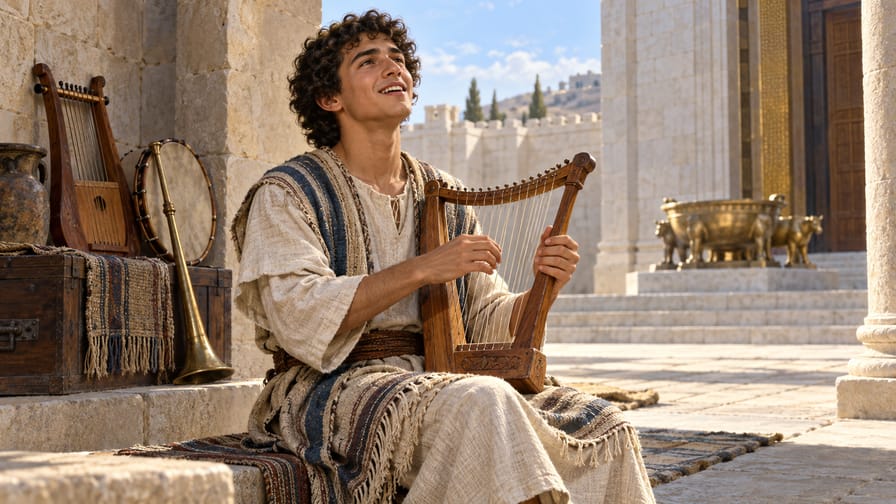
The figure of Buquias, though briefly mentioned in the Hebrew Scriptures, offers a starting point for a deep theological analysis, especially from an evangelical Protestant perspective. His inclusion in a detailed genealogy is not a mere historical record, but a declaration of divine faithfulness and the continuity of the promise, even through characters who do not occupy the center of biblical narratives.
This study will examine the onomastic meaning of Buquias, his historical and genealogical context, the inference of his role and character, as well as his theological and typological relevance within God's grand redemptive plan. Exegetical precision and adherence to biblical authority are fundamental for understanding the importance of every detail in the Scriptures, however small it may seem.
The analysis of Buquias allows us to appreciate the depth of the Chronicler's work and the way God weaves His story of salvation through generations, connecting the past, present, and future of the covenant with Israel and, ultimately, with the full revelation in Christ.
1. Etymology and meaning of the name
The name Buquias (Hebrew: בֻּקִּיָּה, Buqqiyyāh) appears in the Hebrew Scriptures as part of a genealogy in the book of 1 Chronicles. The transliteration Buqqiyyāh is derived from a Hebrew root that offers multiple possibilities of interpretation, each laden with potential theological meaning.
The most accepted etymology for Buqqiyyāh combines the verbal element bāqaq (בָּקַק), which means "to empty," "to pour out," or "to lay waste," with the theophoric suffix -yāh (יָהּ), a shortened form of the divine name Yahweh (YHWH). Thus, a literal interpretation of the name would be "Yahweh has emptied" or "Yahweh has poured out."
Another possible derivation connects the name to the root buqqi, which can mean "bubble" or "mouth." In this sense, the name could be interpreted as "Bubble of Yahweh" or "Mouth of Yahweh." This latter interpretation, in particular, resonates with biblical themes of divine communication and prophecy, positioning the individual as a potential channel or recipient of the word of God.
Although there are no other prominent biblical characters with the exact name of Buquias, the theophoric structure -yāh is extremely common in Hebrew names, indicating a strong connection of the individual with God and expressing a prayer, a blessing, or a declaration about the character of Yahweh. Examples include Isaiah (Yesha'yahu, "Yahweh saves") and Jeremiah (Yirmeyahu, "Yahweh exalts").
The theological significance of the name, though speculative in the absence of narrative, can be multifaceted. If "Yahweh has emptied" or "poured out," it could indicate a divine intervention in the family's life, whether for provision, judgment, or a new stage. If "Mouth of Yahweh," it suggests a connection with the divine word and will, even if there is no record of Buquias as a prophet or spokesman for God. In any case, the name points to the sovereignty and activity of Yahweh in the history of His people.
For the evangelical perspective, the etymology of biblical names often carries weight that reflects divine providence and the individual's identity in relation to God. Even for obscure figures like Buquias, the name serves as a reminder of God's constant and active presence in the genealogy of Israel, preparing the way for the Messiah.
2. Historical context and biblical narrative
The mention of Buquias is found in the book of 1 Chronicles 9:35-36, where he appears as part of a genealogy of the tribe of Benjamin. This record is part of a broader list of families who settled in Jerusalem after the return from the Babylonian exile. The genealogies in Chronicles are of vital importance to the Chronicler, serving specific theological and social purposes.
The precise historical period for Buquias, as a link in a long genealogical chain, is difficult to determine with exactness. However, the genealogy in which he is included traces the lineage back to Saul and Jonathan, prominent figures from the period of the United Monarchy of Israel (11th-10th centuries BCE). The immediate context of the list in 1 Chronicles 9 is the post-exilic period, likely in the 5th-4th centuries BCE, when the people of Judah were returning to their land and rebuilding their national and religious identity.
The political, social, and religious context of the Chronicler's time was one of restoration. After decades of exile in Babylon, the Jews returned to a desolate Jerusalem, under Persian rule. The need to re-establish social, priestly, and administrative structures was pressing. Genealogies served to legitimate land rights, priesthood, and to reaffirm the continuity of tribal and family identity, something crucial for the cohesion of the people.
The genealogy of Buquias positions him as the son of Micah and a descendant of Jonathan, son of King Saul. The specific passage is 1 Chronicles 9:35-36: "In Gibeon lived the father of Gibeon, Jeiel and the name of his wife was Maacah. His firstborn son was Abdon, then Zur, Kish, Baal, Ner, Nadab, Gedor, Ahio, Zechariah, and Mikloth. Mikloth begot Shimeam. They also lived with their relatives in Jerusalem, near their brothers." And then, 1 Chronicles 9:37-38 continues: "Shimeam begot Ahaz, Ahaz begot Jehoadah, Jehoadah begot Alemeth, Azmaveth, and Zimri. Zimri begot Moza, Moza begot Binea, Rephaiah, Eleasah, and Azel. Azel had six sons, whose names were Azrikam, Bocheru, Ishmael, Sheariah, Obadiah, and Hanan. All these were the sons of Azel." The genealogy that includes him is actually that of 1 Chronicles 8:29-38 and 1 Chronicles 9:35-44, which are variants of the same list. Buquias appears in 1 Chronicles 9:35-36 as a descendant of Jonathan, son of Saul, through a line that passes through Micah.
The genealogy of Buquias in 1 Chronicles 9:35-36 (which is an echo and expansion of 1 Chronicles 8:29-38) lists: "In Gibeon lived the father of Gibeon, Jeiel and the name of his wife was Maacah. His firstborn son was Abdon, then Zur, Kish, Baal, Ner, Nadab, Gedor, Ahio, Zechariah, and Mikloth. Mikloth begot Shimeam. They also lived with their relatives in Jerusalem, near their brothers. Ner begot Kish, Kish begot Saul, Saul begot Jonathan, Malchishua, Abinadab, and Eshbaal. The son of Jonathan was Merib-Baal, and Merib-Baal begot Micah. The sons of Micah were Pithon, Melech, Tahrea, and Ahaz. Ahaz begot Jehoadah Jehoadah begot Alemeth, Azmaveth, and Zimri. Zimri begot Moza Moza begot Binea, Rephaiah, Eleasah, and Azel. Azel had six sons, whose names were Azrikam, Bocheru, Ishmael, Sheariah, Obadiah, and Hanan. All these were the sons of Azel." Buquias is the son of Azel, listed in 1 Chronicles 8:38 and 1 Chronicles 9:44 as Bocheru, which is a variation or shortened form of the name Buquias in some translations and studies. The form Bocheru (בֹּכְרוּ, Bokhrû) is listed as the second son of Azel. This variation is important for identifying the character within the different lists.
The geography related to Buquias, therefore, is the tribe of Benjamin, with a focus on Gibeon (where Saul's family resided) and Jerusalem (where these families moved after the exile). The tribe of Benjamin was strategically important, located between Judah and Ephraim, and its capital, Gibeah, was Saul's hometown. The inclusion of this genealogy reinforces the continuity of the Benjaminite presence in Jerusalem, even after the fall of their monarchy and the exile.
The relationships of Buquias are primarily with his royal ancestors: Saul and Jonathan. His existence in the genealogical record is proof of the lineage's survival, even after the failure of Saul's dynasty. The Chronicler, by listing these families, was not only recording history but also reaffirming the identity and right of God's people to their inheritance and their place in the restored community.
3. Character and role in biblical narrative
Unlike figures such as David, Moses, or Peter, Buquias does not have a biographical narrative that reveals his character, actions, or decisions. He is a link in a genealogical chain, a name in a list. Consequently, there are no documented virtues, spiritual qualities, sins, or moral failures that we can analyze directly from his life. His "character" is, in large part, inferred from his positioning within the Chronicler's theology.
The role of Buquias, and of many other names in the genealogies, is that of a silent witness to God's faithfulness. He represents the continuity of a lineage, the preservation of a family, and the maintenance of Benjamin's tribal identity. His inclusion in the list of Jerusalem residents after the exile underscores the importance of community restoration and the repopulation of the holy city.
Although he does not have a specific recorded vocation, such as prophet, priest, or king, his mere existence and record serve a greater theological function. He is part of the mosaic that demonstrates divine sovereignty over history, ensuring that God's promises were kept through the generations, even in times of adversity and exile. The absence of a personal narrative does not diminish his significance, but rather re-signifies it as part of a greater purpose.
The analysis of Buquias' character, therefore, must focus on the "virtue" of his existence as a link in the chain of salvation history. He personifies the idea that every individual, however anonymous, has a place in God's plan. His presence in the genealogy demonstrates divine meticulousness in recording and preserving the lineage of His people, a crucial aspect for the coming of the Messiah.
Significant actions or key decisions attributed to Buquias are not mentioned. However, his most important "action" is that of having existed and contributed to the continuity of his family. From an evangelical perspective, this reminds us that faithfulness to God is not always manifested in great public deeds, but often in simple existence and in the transmission of faith or lineage through generations, a testament to God's preserving grace.
His "character development" is nonexistent in terms of personal narrative. However, his "development" can be seen in the unfolding of Israel's history, where each name contributes to the fullness of time. The life of Buquias, like that of many others, is a reminder of the vast community of believers and families that form the people of God, each playing their designated role, even if it is only that of a genealogical link.
4. Theological significance and typology
The theological significance of Buquias, as a link in a genealogy, lies deeply in redemptive history and the progressive revelation of God. His inclusion in the book of Chronicles is not accidental, but serves to reinforce God's faithfulness to His covenants, even through lineages that did not become the main messianic line.
Although Buquias is not a direct typological figure of Christ in the sense of prefiguring specific events or aspects of His life or ministry, his existence in the genealogy indirectly points to the preparation of the way for the Messiah. The careful preservation of genealogies in Israel was essential to establish the identity of the Messiah as a descendant of David, from the tribe of Judah (Matthew 1:1-17 Luke 3:23-38).
The lineage of Buquias, being from the tribe of Benjamin and a descendant of Saul, serves as a reminder of God's sovereignty over all the tribes of Israel. Even Saul's lineage, which lost the throne to David due to disobedience (1 Samuel 15:23), was not completely erased. The preservation of his descendants in post-exilic Jerusalem demonstrates God's grace that extends to all of His people, not just to the royal Davidic line.
The connection of Buquias with central theological themes is evident in the Chronicler's emphasis on restoration and continuity. His presence in the lists serves to show that, despite the exile and dispersion, God was gathering and restoring His people. This resonates with the doctrine of God's faithfulness (Deuteronomy 7:9) and His ability to fulfill His promises, even when circumstances seem unfavorable.
The meaning of the name "Yahweh has emptied" or "Mouth of Yahweh" can be subtly connected to the idea of God pouring out His blessing or His Word upon His people. In the broader context of redemptive history, Christ is the incarnate Word of God (John 1:1, 14), the One through whom God poured out His grace and salvation. Thus, even an obscure name can, by inference, point to the divine activity that culminates in Jesus Christ.
The inclusion of Buquias in the Chronicler's genealogies, which aimed to encourage the returning exiles, reinforces the doctrine of the continuity of God's covenant with Israel. This does not nullify Saul's failure, but underlines God's persevering grace that maintains a remnant and fulfills His plan through different means. Faith and obedience are underlying themes, for restoration depends on the people's response to the covenant.
Although there are no direct mentions of Buquias in the New Testament, the theology of genealogies and God's faithfulness to His promises is fundamental for understanding the coming of Christ. The meticulousness with which the Scriptures record these lineages underscores the precision of divine providence in preparing for the fullness of time (Galatians 4:4) for the incarnation of the Son of God.
5. Biblical-theological legacy and canonical references
The figure of Buquias, though without a personal narrative, leaves a significant biblical-theological legacy by his mere inclusion in the canonical Scriptures. His main reference is in 1 Chronicles 9:35-36 (and variants in 1 Chronicles 8:29-38), where he is listed as a descendant of Jonathan and Saul, from the tribe of Benjamin. This is the only direct mention of the name, but its relevance extends to a broader understanding of the books of Chronicles.
Buquias made no direct literary contributions, nor is he the author of Psalms or epistles. His "contribution" lies in the fact that his existence and his mention in the canon serve as a piece in the vast puzzle of salvation history. He is a testament to divine attention to detail and the importance of every link in Israel's genealogical chain.
The influence of Buquias in biblical theology is not primary, but secondary, serving to illustrate broader points of the Chronicler. His presence reinforces the theology of covenant continuity, the importance of tribal identity for the returning exiles, and God's sovereignty in preserving His people. The Chronicler sought to encourage a disheartened community, reminding them of their glorious past and God's continuing faithfulness.
In Jewish and Christian interpretive tradition, Buquias is rarely the focus of commentaries or in-depth studies due to the absence of narrative data. He is generally treated as part of the genealogical material that establishes the social and religious structure of Israel. However, Reformed and evangelical theology emphasizes that "All Scripture is God-breathed and is useful for teaching" (2 Timothy 3:16), which means that even genealogies have a purpose and value.
For Reformed and evangelical theology, the inclusion of names like Buquias in the genealogies underscores the historicity of biblical faith and God's providence in preparing for the coming of Christ. The precision of genealogical records is fundamental to demonstrate that Jesus of Nazareth fulfilled the messianic prophecies, being a descendant of David and from the tribe of Judah. The existence of other lineages, such as that of Buquias, shows the comprehensiveness of God's work throughout Israel.
The importance of Buquias for understanding the canon lies in his contribution to the completeness of the historical and theological record. The genealogies in Chronicles, including that of Buquias, are crucial for the theology of post-exilic restoration, for the affirmation of Israel's identity, and for the demonstration of God's faithfulness in maintaining the structure of His covenant people, setting the stage for the consummation of all promises in Christ Jesus.