


Matthias
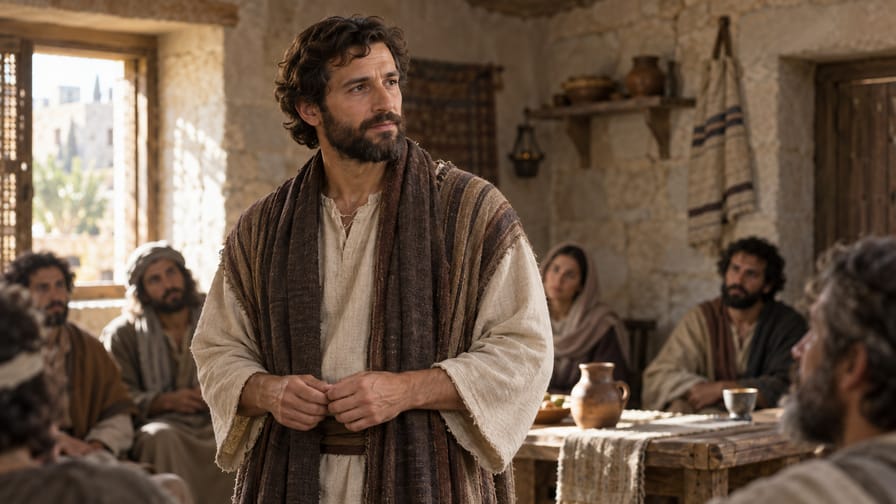
The figure of Matthias, though briefly mentioned in the Scriptures, holds a singular and theologically significant position in the history of the early church. His election to replace Judas Iscariot in the apostolic college, as narrated in Acts 1, is a crucial event for understanding the continuity of the apostolic mission and divine providence in the formation of the new covenant.
This article seeks to explore the depth of Matthias' story, from the etymology of his name to his theological legacy, from an evangelical Protestant perspective, emphasizing biblical authority and careful exegesis of the canonical texts.
1. Etymology and Meaning of the Name
The name Matthias (in Greek, Maththias, Μαθθίας) is an abbreviated form or variant of the name Matthaios (Ματθαῖος), which corresponds to the Hebrew Mattityahu (מַתִּתְיָהוּ) or Mattithiah (מַתִּתְיָה). The etymological root of the name is composed of two elements: mattan (מַתָּן), meaning "gift" or "present", and Yah (יָהּ), an abbreviation of the divine name Yahweh (YHWH).
Thus, the literal meaning of the name Matthias is "Gift of Yahweh" or "Gift of God". This onomastic significance is particularly relevant in the context of his election, as he was seen as a providential gift from God to restore the divinely established apostolic number.
The most known variation of the name in biblical languages is Matthew, the apostle and author of the first canonical Gospel. Although they share the same etymological root, Matthias and Matthew are distinct characters in the New Testament narrative. There are no other prominent biblical characters named Matthias.
The theological significance of the name lies in the belief that the choice of Matthias was not merely human, but divinely orchestrated. He was, in fact, a "Gift of Yahweh" to the nascent church, a testament to God's faithfulness in preserving and guiding His people, even in the face of betrayal and loss.
2. Historical Context and Biblical Narrative
The biblical narrative of Matthias is situated in the crucial period immediately following the ascension of Jesus Christ into heaven and before the outpouring of the Holy Spirit at Pentecost, as recorded in Acts of the Apostles. This period, which lasted about ten days, was marked by the expectation and prayer of the disciples gathered in Jerusalem (Acts 1:12-14).
The socio-political context of the time was that of the Roman occupation of Judea, with religious and nationalist tensions permeating Jewish society. The community of believers, about 120 people, was gathered, awaiting the fulfillment of Jesus' promise concerning the Comforter (Acts 1:4-5).
It is in this setting that Peter stands up and proposes the replacement of Judas Iscariot, who had betrayed Jesus and subsequently committed suicide (Acts 1:16-19). The need to fill the vacancy was not arbitrary, but founded upon the Old Testament Scriptures, specifically in Psalm 69:25 and Psalm 109:8, which Peter quotes to justify the action (Acts 1:20).
The narrative does not provide details about Matthias' genealogy or family origin. He is presented as one of the men who accompanied Jesus "from John's baptism until the day He was taken up from us" (Acts 1:21-22). This is the only canonical information about his pre-apostolic life, but it is crucial for understanding the legitimacy of his election.
The main events of Matthias' life focus on his selection. Two men were proposed: Joseph called Barsabbas (also known as Justus), and Matthias (Acts 1:23). After prayer, they cast lots, and the lot fell on Matthias, who was then "counted with the eleven apostles" (Acts 1:26).
The geography related to Matthias is primarily Jerusalem, where his election took place. His relationship with other biblical characters is, above all, with the apostles and the early community of believers. He joined the inner circle of the Twelve, who had been Jesus' closest companions during His earthly ministry.
3. Character and Role in the Biblical Narrative
Although the Bible provides few direct details about Matthias' character, we can infer certain qualities from the criteria established for the choice of a new apostle. The requirements were rigorous: the replacement should have been a constant companion of Jesus from the beginning of His public ministry until His ascension (Acts 1:21-22).
This means that Matthias was a faithful and dedicated follower who witnessed firsthand the teachings, miracles, death, and resurrection of Jesus. His continuous presence alongside the apostles, even before his election, demonstrates a lasting commitment to the cause of Christ and a deep personal faith.
The most important qualification for the new apostle was to be "a witness with us of His resurrection" (Acts 1:22). This implies that Matthias not only believed in the resurrection but had witnessed it or had direct and irrefutable knowledge of it. This virtue of eyewitness was essential for apostolic credibility.
There is no mention of documented sins, weaknesses, or moral failures concerning Matthias in the canonical Scriptures, which is consistent with the brief mention of his person. His specific vocation and function were those of an apostle, "one sent" with special authority to witness to Christ and establish the church.
The role played by Matthias was to restore the symbolic number of the Twelve Apostles, who represented the twelve tribes of Israel and would be the foundations of the new covenant community (Revelation 21:14). His election was a significant action that ensured the continuity of the integral apostolic witness.
Matthias' key decision was his availability and willingness to serve, submitting to the divinely guided selection process. His acceptance of the lot cast demonstrates humility and trust in God's sovereignty. There is no information about the later development of his character in the Bible, but his inclusion in the group of the Twelve is his most important legacy.
4. Theological Significance and Typology
The election of Matthias is profoundly significant for evangelical Protestant theology, underscoring divine providence and the order established by God for His church. He plays a role in redemptive history by ensuring the integrity of the apostolic witness, which is fundamental to the progressive revelation of God's plan.
The need to replace Judas Iscariot was not merely numerical, but theological. The Twelve Apostles were chosen by Jesus to be the pillars of the church, seated on thrones to judge the twelve tribes of Israel (Matthew 19:28). Judas' betrayal created a gap that needed to be filled to fulfill the divine plan.
The election of Matthias, therefore, is not direct Christocentric typology in the sense of prefiguring Christ, but rather points to Christ's faithfulness in maintaining His church and His plan. The restoration of the number twelve symbolizes the continuity of God's covenant with His people, now expanded to include believers from all nations, with the apostles as its foundations.
Peter's Old Testament citations (Psalm 69:25 and Psalm 109:8) demonstrate that Judas' betrayal and the need for a replacement were within God's prophetic plan. This reinforces divine sovereignty over human events, even the most tragic, and the infallibility of the Scriptures.
The choice of Matthias connects with central theological themes such as the sovereignty of God, apostolic authority, and the importance of faithful witness. The disciples' prayer before casting lots (Acts 1:24-25) reveals their trust in divine guidance, recognizing that "You, Lord, know the hearts of all."
The practice of casting lots, though not a normative method for decision-making in the post-Pentecost church (where the Holy Spirit would guide directly), demonstrates the sincere search for God's will in a unique transitional moment. It is an example of obedience and faith in divine providence before the full coming of the Spirit.
The doctrine associated with Matthias is that of the apostolic office, which was singular and unrepeatable in its foundation. The apostles were eyewitnesses of the resurrection and were commissioned directly by Jesus to lay the foundations of the church. Matthias fulfilled this qualification and was divinely appointed to this irreplaceable function.
5. Biblical-Theological Legacy and Canonical References
The mention of Matthias is found exclusively in Acts 1:15-26 in the biblical canon. After his election, he is no longer named, though he is implicitly included in the group of the "twelve apostles" who continued to preach and build up the church. His absence in other narratives does not diminish his theological importance, but highlights the focus of the book of Acts on the collective work of the apostles.
There are no literary contributions attributed to Matthias in the canon. He is not the author of books, Psalms, or epistles. His influence lies in his role of ensuring the integrity of the apostolic college and, by extension, the authority and continuity of the early church's evangelical witness.
In biblical theology, the inclusion of Matthias is crucial for understanding the nature of the apostolate. His election through a divinely guided process, based on specific criteria (having accompanied Jesus and being a witness of the resurrection), differentiates the apostolic office from other forms of ecclesiastical leadership.
Christian interpretive tradition, especially the Eastern one, attributes to Matthias evangelistic missions in Judea, Ethiopia, and Syria, and his martyrdom by stoning and decapitation. Although these traditions are venerable, they do not possess the same level of authority as the canonical Scriptures and should be treated with discernment.
In intertestamental literature, there are no references to Matthias, as his appearance is strictly New Testament. However, the basis for the restoration of the Twelve, as mentioned by Peter, finds its prophetic roots in the Old Testament, connecting the new covenant with the promises given to Israel.
The treatment of Matthias in Reformed and evangelical theology emphasizes that the apostolic office, in the sense of being an eyewitness of the risen Christ and having foundational authority for the church, was unique and does not perpetuate itself. Matthias was the last to be divinely called to fill that singular position.
The importance of Matthias for understanding the canon and evangelical theology lies in the demonstration of God's active providence in the formation of the church. His election validates the authority of the Twelve as the foundations of the Christian faith, and his story reminds us that God always provides the means for His redemptive plan to be fulfilled, even in the face of human failure.