


Barnabas
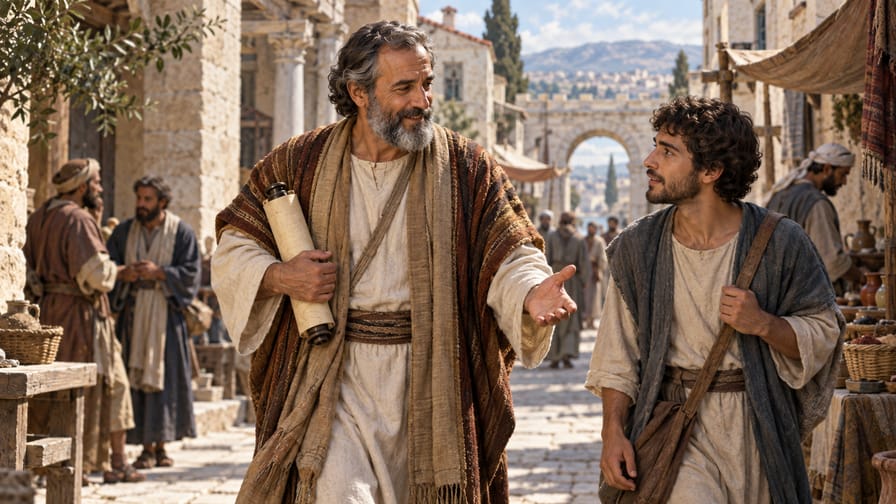
The figure of Barnabas emerges in the pages of the New Testament as a fundamental pillar in the establishment and expansion of the early church. His name, originally Joseph, was changed by the apostles to reflect his most striking characteristic, making him a remarkable example of generosity, encouragement, and missionary service. From an evangelical Protestant perspective, the life of Barnabas offers rich lessons on discipleship, leadership, missions, and divine grace amidst the complexities of Christian life and ministry.
This study proposes an in-depth exegetical and theological analysis of Barnabas, exploring his onomastic meaning, historical context, and the biblical narrative of his life. We will address his character and crucial role, as well as his theological significance and lasting legacy for the Christian faith. The research will be grounded in the Scriptures, with attention to the original languages and Reformed and evangelical interpretation.
The relevance of Barnabas is not restricted to his historical prominence but extends to his doctrinal and practical impact. He personifies essential virtues for the life of the church and for the propagation of the Gospel, serving as a model of faith and service. His story is a testament to the work of the Holy Spirit in equipping individuals for God's mission in the world.
1. Etymology and meaning of the name
The original name of Barnabas was Ioseph (Ἰωσήφ), a Greek form of the Hebrew name Yosef (יוֹסֵף), which means "God will add" or "God will increase." This was a common name among Jews of the time, referring to the patriarch Joseph, son of Jacob. However, the apostles gave him a new name that became his best-known identity in Christian tradition.
The name Barnabas (Βαρνάβας) is of Aramaic origin, as explicitly stated in Acts 4:36, where it is translated as hyios paraklēseōs (υἱὸς παρακλήσεως), meaning "son of encouragement" or "son of consolation." The Aramaic root is probably bar nebhūʾā (בַּר נְבוּאָא), meaning "son of prophecy," or bar neḥāmā (בַּר נְחָמָא), which means "son of consolation/comfort."
The Greek translation paraklēseōs encompasses both the idea of "encouragement" and that of "comfort" or "exhortation." The term parakletos (παράκλητος) in the New Testament is used to describe the Holy Spirit as Comforter or Helper (John 14:16, 26 15:26 16:7). Thus, the name Barnabas not only described his personality but also pointed to an almost prophetic or charismatic function of consolation and exhortation in the Christian community.
The theological significance of the name lies in its attribution by the apostles, indicating a divinely inspired recognition of his ministry. It was not a self-attributed name, but an epithet given by those who witnessed his life and service. This suggests that his gift of encouragement was so prominent that it became his distinctive mark, a practical manifestation of God's grace.
In the biblical context, a name change frequently signals a new phase or a special purpose in an individual's life, as occurred with Abram to Abraham (Genesis 17:5) and Simon to Peter (John 1:42). For Barnabas, the new name underscored his calling and the way he impacted the lives of others, reinforcing the importance of the ministry of encouragement in the church.
There are no other prominent biblical characters known by the name Barnabas, which makes him a unique figure in terms of his designation. His name became synonymous with a vital ministry, reminding the church of the importance of building up and strengthening fellow believers, a fundamental principle of evangelical theology.
2. Historical context and biblical narrative
Barnabas lived in the first century A.D., a period of intense religious, political, and social effervescence. The Roman Empire dominated the Mediterranean world, and Judea was a Roman province. Judaism was at a point of transition, with various sects and interpretations of the Law, and the nascent Christian church faced internal and external challenges, including persecutions and theological debates.
He was a Jew of Levite origin, born on the island of Cyprus (Acts 4:36). Levites were traditionally responsible for service in the temple, but with the diaspora, many settled in other regions. His Levite origin may have contributed to his knowledge of the Scriptures and his dedication to religious service, although his work in the early church transcended the ancient priestly functions.
The biblical narrative of Barnabas begins in Acts 4:36-37, where he is presented as an example of generosity and material detachment. He sold a field he owned and brought the money to the apostles, demonstrating a radical commitment to the community and the principles of the new faith. This action reflects the practice of communal living that characterized the church in Jerusalem (Acts 2:44-45).
One of the most crucial moments in his story is his role in the acceptance of Saul of Tarsus, the future apostle Paul, by the Jerusalem community. After his conversion, Saul was feared and viewed with suspicion by the disciples. It was Barnabas who took the initiative to welcome him, introduce him to the apostles, and testify to his genuine conversion (Acts 9:26-27). This intervention was vital for Paul's ministry.
Later, when the Gospel began to spread to the Gentiles in Antioch, the Jerusalem church sent Barnabas to investigate and strengthen the new converts. He confirmed the work of the Holy Spirit and encouraged everyone to remain faithful to the Lord (Acts 11:22-24). Seeing the growth and the need for more workers, Barnabas traveled to Tarsus to seek Paul, initiating one of the most fruitful missionary partnerships in church history (Acts 11:25-26).
Together, Barnabas and Paul ministered in Antioch for a year, teaching and discipling. From there, they were sent by the Holy Spirit on the first missionary journey (Acts 13:1-3), which took them to Cyprus, Barnabas' homeland, and to various cities in Asia Minor, such as Perga, Antioch of Pisidia, Iconium, Lystra, and Derbe. They preached the Gospel to Jews and Gentiles, facing opposition and establishing churches (Acts 13-14).
After the first journey, Barnabas and Paul participated in the Council of Jerusalem, where they defended the freedom of Gentile converts from the observance of the Mosaic Law, contributing to the formulation of the doctrine of salvation by grace through faith (Acts 15:1-35). However, a subsequent disagreement about John Mark's participation in a second missionary journey led to the separation of Barnabas and Paul (Acts 15:36-41). Barnabas departed for Cyprus with Mark, while Paul proceeded to other regions.
3. Character and role in the biblical narrative
The character of Barnabas is consistently portrayed in the Scriptures with admirable qualities, which make him a model of Christian virtues. His designation as "son of encouragement" (Acts 4:36) was not merely a title but an accurate description of his essence and ministry. He possessed a remarkable ability to see potential in others and to invest in them.
One of his most prominent virtues was generosity. The sale of his field and the delivery of the proceeds to the apostles (Acts 4:37) demonstrate a detachment from material possessions and a deep communion with the church. This action was not motivated by ostentation, but by a heart truly dedicated to the cause of the Gospel and the care for the needy.
His spiritual discernment and courage are evident in his intervention on behalf of Saul (Paul) in Jerusalem (Acts 9:27). While other apostles hesitated, Barnabas risked his reputation and security to endorse a former persecutor, recognizing the genuineness of his conversion. This attitude was crucial for Paul's integration into church leadership and for his future apostolic ministry.
Barnabas also stood out as a visionary and humble leader. Upon being sent to Antioch, he not merely confirmed the work of the Holy Spirit but also recognized the need for Paul for the work there (Acts 11:22-26). His willingness to seek out and elevate another leader, even if that person would surpass him in prominence, reveals a rare humility and focus on God's mission above personal recognition.
He played the role of missionary and evangelist alongside Paul, leading the first missionary journey to the Gentiles. In Acts 13:1, he is listed before Paul, indicating his initial leadership position. His preaching and teaching were fundamental for the establishment of various Christian communities in Asia Minor, demonstrating an unwavering commitment to the proclamation of the Gospel (Acts 13:4-14:28).
However, the biblical narrative also reveals a weakness in Barnabas, demonstrating his humanity. In Galatians 2:13, Paul reports that Barnabas was "carried away by their hypocrisy" when he withdrew from the Gentiles in Antioch, following the pressure of Peter and the legalistic Jews. This incident underscores that even pious leaders are susceptible to failures and that doctrinal vigilance is essential.
Another point of tension was his disagreement with Paul concerning John Mark (Acts 15:36-41). While Paul did not want to take Mark due to his previous desertion, Barnabas insisted on giving him a second chance. Although it resulted in a separation, Barnabas' loyalty to Mark and his belief in the redemption and potential of a young worker were ultimately vindicated, as Mark later became useful to Paul (Colossians 4:10 2 Timothy 4:11). This decision highlights his quality as a mentor and encourager.
4. Theological significance and typology
The theological significance of Barnabas is multifaceted and deeply relevant for understanding redemptive history and progressive revelation. His life and ministry illustrate crucial principles of the Christian faith and the work of the Holy Spirit in the early church. He is not merely a historical character, but a vehicle of God's grace.
Firstly, Barnabas is a model of sacrificial generosity, which points to Christ himself. His willingness to sell his possessions and give them to the apostles (Acts 4:36-37) reflects the spirit of Christ, who "though he was rich, yet for your sake he became poor, so that you through his poverty might become rich" (2 Corinthians 8:9). The generosity of Barnabas was not merely a good deed, but a radical response to salvation in Christ, demonstrating inner transformation.
His function as "son of encouragement" points to the work of the Holy Spirit as the Parakletos (Comforter/Helper). Barnabas, full of the Holy Spirit (Acts 11:24), manifested a spiritual gift of encouraging and building up, which is a vital function of the Spirit in the lives of believers and the church. He personified the grace of God in action, strengthening the weak and welcoming the marginalized.
The role of Barnabas in Paul's acceptance by the church (Acts 9:27) is theologically significant. He was an instrument of divine providence, facilitating the entry of one of the greatest apostles into the missionary scene. Without the intervention of Barnabas, Paul's ministry could have been severely delayed or prevented, which would have profound implications for the expansion of the Gospel to the Gentiles and for the formulation of Pauline theology.
He is also an example of unity in Christ that transcends ethnic and social barriers. Although a Levite Jew, Barnabas fully embraced the mission to the Gentiles, working side by side with Paul and defending the freedom of Gentile converts at the Council of Jerusalem (Acts 15). His life demonstrated that in Christ "there is neither Jew nor Greek, there is neither slave nor free, there is neither male nor female for you are all one in Christ Jesus" (Galatians 3:28).
Despite his failure in Galatians 2:13, which Paul publicly rebuked, Barnabas serves as a reminder of the doctrine of perseverance and divine grace. Even spiritual leaders can falter, but God's grace is sufficient to restore and continue to use them. His subsequently successful mission with John Mark reiterates that God uses imperfect vessels for His perfect purposes.
His attitude toward John Mark (Acts 15:36-41) illustrates the importance of second chances and discipleship. Reformed theology emphasizes the sovereignty of God and human responsibility. Barnabas, by insisting on Mark, demonstrated a practical faith in God's ability to redeem and use those who failed, a central principle of grace and ongoing discipleship in Christian life.
In summary, Barnabas typifies the Christian ministry of service and encouragement, fundamental for the growth of the Kingdom of God. He points to Christ as the supreme Comforter and Helper, and to the church as the body called to manifest this consolation and encouragement to one another and to the world. His life is a testament to the Holy Spirit's empowerment for mission.
5. Biblical-theological legacy and canonical references
The biblical-theological legacy of Barnabas is vast and enduring, although he was not a canonical author. His mentions in the Scriptures, particularly in the book of Acts and in some Pauline epistles, solidify his importance for understanding the development of the early church and apostolic theology. He is a character whose impact was felt in practice and in doctrine.
Besides Acts, Barnabas is mentioned by Paul in Galatians 2:1, 9, 13, where he is recognized as a "pillar" of the Jerusalem church and a missionary partner. The reference in Galatians 2:13, although describing a failure, paradoxically underscores his prominence, as his action had enough weight to influence others. In 1 Corinthians 9:6, Paul defends him, along with himself, as having the right to be supported by the ministry, indicating that Barnabas remained active in missionary service.
The last canonical mention of Barnabas occurs in Colossians 4:10, where Paul sends greetings from John Mark, referring to him as "Barnabas' cousin." This reference is significant, as it shows that the relationship between Mark and Barnabas remained strong, and that Mark, under Barnabas' mentorship, had developed to the point of becoming a valuable companion to Paul. This validates Barnabas' decision to give Mark a second chance.
In Christian interpretive tradition, Barnabas is often celebrated as the "Apostle of Encouragement." The Church Fathers saw him as an example of generosity and servant leadership. Reformed and evangelical theologians emphasize his life as a paradigm of practical faith, discipleship, and missionary commitment. His willingness to welcome Paul and to encourage John Mark are points frequently cited in sermons and studies on leadership and mentorship.
Although not a canonical author, there is a work known as the Epistle of Barnabas, an ancient Christian text, pseudepigraphal, dated to the late 1st or early 2nd century A.D. This epistle, though not considered part of the biblical canon by evangelical Protestants, offers a glimpse into the theological concerns of the early church, particularly regarding the allegorical interpretation of the Old Testament and the distinction between Christianity and Judaism.
Reformed and evangelical theology values the figure of Barnabas for his representation of common grace and saving grace in action. He demonstrates how God uses individuals with specific gifts to build up the church and expand His Kingdom. His story reinforces the doctrine of God's sovereignty, who orchestrates encounters and partnerships to fulfill His purposes, even through human disagreements.
The importance of Barnabas for understanding the canon lies in his contribution to the book of Acts, which narrates the expansion of the Gospel, and to the Pauline epistles, which lay the foundation for much of Christian doctrine. He is a vital link in the chain of witnesses who carried the message of Christ from Jerusalem "to the ends of the earth" (Acts 1:8), solidifying the foundation of the church and the advancement of global mission.